Customer Reviews
 FAQ
FAQ Blog
Blog


Key Broke In Lock, NOW WHAT?
You’re standing at your front door, car door, or office entrance. The key turned, something gave way, and now half of it is gone. Lodged somewhere inside the lock cylinder. Unreachable. Unmovable.
Your hand is still holding the bow. The other half is not coming out on its own.
If you’re reading this, you’re likely in one of two positions. You are either staring at that broken key right now, weighing your options. Or you’ve been putting off dealing with it, hoping the problem will solve itself. It will not.
Here is what you need to know. Advanced Security Safe and Lock has been extracting broken keys for Central Maryland residents and business owners for over two decades. We do not guess. We do not experiment on your lock. We remove the fragment, cut you a fresh key, and send you on your way. Usually in under twenty minutes.
Whether you’re in Columbia, Ellicott City, Catonsville, or anywhere else in the Central Maryland region, we are the locksmiths your neighbors call when their key refuses to cooperate.
THE MOMENT EVERY HOMEOWNER DREADS
It is 7:15 on a Tuesday morning. You have a meeting at 8:30. You are carrying coffee, a laptop bag, and your child’s forgotten permission slip. You insert the deadbolt key, apply normal pressure, and feel the key give way like a stale pretzel.
You try the remaining half. It turns, but the lock does not engage. The internal fragment is blocking the mechanism. You cannot lock the door behind you. You cannot secure your home. And you absolutely cannot leave it in this condition.
This is not a hypothetical situation. This is a Tuesday morning for someone in Howard County, Baltimore County, or Anne Arundel County. This is the moment people call Advanced Security Safe and Lock.
We answer those calls. Not a dispatch center in another state. Not a voicemail box checked during business hours. Our technicians live and work in the communities we serve. When your key breaks in Catonsville, the person who answers is ten or fifteen minutes away, not ten or fifteen miles.
TWO WAYS TO GET BACK IN CONTROL
Not everyone needs a technician to come to them. Some situations allow you to bring the problem to us. Some require immediate on-site assistance. We built our service model around both realities.
OPTION ONE: WE COME TO YOU
Your key is broken in the front door. The car ignition. The padlock on your storage unit. You need the fragment removed where it sits, and you need it removed now.
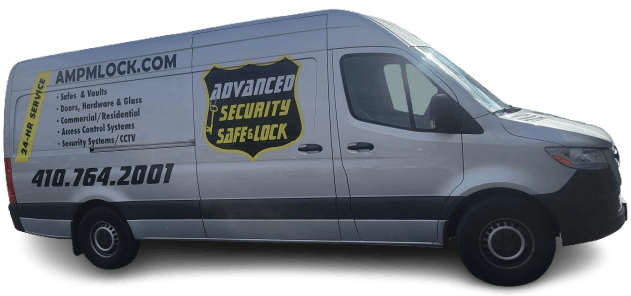
Our mobile service vans are fully equipped rolling workshops. Each contains multiple extraction tool sets, key decoding equipment, impressioning handles, and enough key blank inventory to match virtually any residential, commercial, or automotive lock manufactured in the last forty years.
When our technician arrives, they do not ask to use your bathroom or borrow your flashlight. They exit the vehicle with everything required to solve your problem on the spot. The van is stocked weekly based on the actual service calls we run. If we extracted a broken key from a 1998 Honda Civic yesterday, we restocked those blanks this morning. If we removed a fragment from a Schlage deadbolt last week, we have the correct extractor tips ready for the next one.
Service area snapshot:
Howard County: Columbia, Ellicott City, Clarksville, Elkridge
Baltimore County: Catonsville, Arbutus, Towson, Pikesville
Anne Arundel County: Glen Burnie, Severna Park, Odenton
Carroll County: Eldersburg, Sykesville, Westminster
And every municipality and unincorporated community in between
If your mailing address says Maryland and you are located between I-70 and the Patapsco, we have serviced a lock on your street within the last thirty days.
OPTION TWO: YOU COME TO US
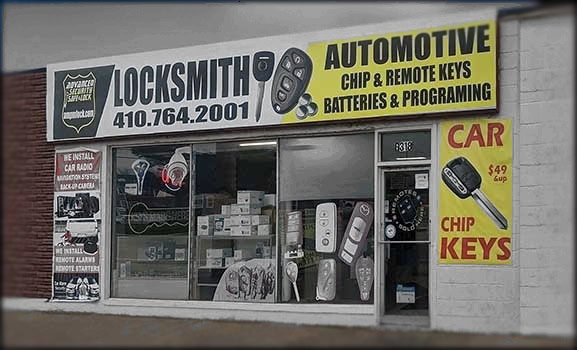
Not every broken key constitutes an emergency. Perhaps the key snapped in a desk drawer lock. A filing cabinet. A lockbox you rarely access. A piece of luggage. An antique sideboard you inherited and barely use.
These situations do not require a mobile visit. They require a solution that does not damage your property.
We have 2 full service shops in Baltimore metro area in addition to express key copy and safe sales shop. We have a dedicated service counter specifically for walk-in lock repairs in our full service shops. You bring us the lock cylinder or the entire door if it is removable. We extract the fragment while you wait.
What you can expect when you walk through our door:
A technician assesses your lock immediately. No appointments required for counter service.
Extraction pricing is quoted before work begins. You approve the cost, we remove the fragment.
While the lock is in our care, we inspect it for wear, damage, or underlying issues that contributed to the break.
We cut new keys from fresh stock. You leave with the original lock restored and multiple working keys.
This option is particularly popular with landlords managing multiple rental properties and facilities managers overseeing commercial buildings. Rather than paying for individual service calls to each location, you consolidate the problem. Bring us the cylinder from unit 4B and the padlock from the maintenance shed. We handle both while you handle your actual responsibilities.
WHY HOME REMEDIES BECOME LOCK REPLACEMENTS
Those videos rarely show the aftermath
We extract broken keys that have already been subjected to home remedies approximately four times per week. In almost every case, the situation is worse than it was originally.
The superglue gamble
Adhesive does not remain exactly where you place it. It wicks into the space between the key fragment and the lock pins. It travels along the shear line. It bonds the fragment to the cylinder housing. What was a simple extraction becomes a cylinder replacement. The glue cannot be dissolved without damaging the lock’s internal finish. The pins cannot be freed without disassembly and ultrasonic cleaning. The cost multiplies.
The magnet myth
Keys are not magnetic. Brass contains no ferrous metal. Nickel silver contains trace amounts at best. You are pressing a magnet against a lock and hoping for physics to suspend its normal rules. It will not. You are simply blocking the keyway.
The hook and hope
A paperclip bent into a crude hook sometimes catches the edge of a broken key. More often, it pushes the fragment deeper into the cylinder, past the point where extractor tools can easily engage. The fragment that was flush with the opening is now recessed one-eighth of an inch. The extraction that would have taken three minutes now requires cylinder removal.
The hammer solution
Striking a lock cylinder transmits force through the entire mechanism. The cam bends. The tailpiece snaps. The housing cracks. We have replaced locks that were structurally sound before a well-intentioned homeowner introduced them to a claw hammer.
THE COST OF WAITING
The lock is on a rarely used storm door. It is on a storage shed at the far end of the property. It is on a filing cabinet containing documents from 2004. The key broke, the fragment stayed, and the lock was simply… left.
This is understandable. You have pressing obligations. The lock is not preventing access to anything essential. It can wait.
What waiting costs you:
The metals involved in locks and keys are not identical. They have different compositions, different galvanic properties, different responses to humidity and temperature fluctuation. When two dissimilar metals remain in contact for extended periods, corrosion develops at the interface. The key fragment bonds to the lock cylinder on a molecular level.
A fragment that could have been lifted out in seconds after the break requires drilling after six months of neglect. The lock must be replaced entirely. The cost of replacement is substantially higher than the cost of extraction.
There is also the matter of forgotten urgency. The storm door becomes the only accessible entrance after a tree falls across your main walkway. The storage shed contains the holiday decorations your spouse specifically requested. The filing cabinet holds the tax document your accountant needs by Friday.
The problem you postponed becomes the emergency you cannot avoid.
WHAT ACTUALLY HAPPENS DURING PROFESSIONAL EXTRACTION
You are entitled to know what you are paying for. Here is exactly what occurs when our technician arrives at your location or when you hand us your lock at the counter.
Step one: assessment without assumption
We examine the keyway, the exposed fragment edge, and the lock brand. Different manufacturers use different keyway profiles. A Schlage C keyway requires a different approach than a Kwikset KW1. Our tool selection is dictated by what we observe, not by what we assume.
Step two: tool selection and engagement
Extractor tools are not interchangeable. Some feature barbed tips designed to catch key serrations. Others have flat, spatula-like profiles that slide beneath the fragment. Still others are tension tools that create friction against the key’s surface. We select based on the fragment’s position and depth.
Step three: controlled extraction
The tool enters the keyway alongside the fragment. We locate purchase. We apply steady, outward pressure. The fragment moves incrementally. We do not jerk, twist, or force. We persuade.
Step four: verification
The fragment is removed. We test the lock with the surviving key half or with a new key cut on-site. The lock operates smoothly. The cylinder rotates fully. The bolt throws and retracts without binding.
Step five: key cutting
If you do not have a usable key, we cut one immediately. We decode the lock by measuring pin heights or read the cuts directly from the extracted fragment. You receive a fresh key cut to factory specifications. No waiting. No return trips.
Step six: education without pressure
We explain what caused the break. Key wear. Lock misalignment. Lack of lubrication. Foreign debris in the keyway. We offer recommendations. You choose whether to act on them. There is no upselling. There is no manufactured urgency.
THE ADVANCED SECURITY DIFFERENCE
There are locksmiths who answer phones. There are locksmiths who own vans. There are locksmiths who carry business cards claiming expertise in areas they have never visited.
Advanced Security Safe and Lock is not those locksmiths
We are a family-owned operation with a physical storefront in Pasadena, Maryland. Our technicians are not independent contractors working under multiple company names. They are employees of this company, trained by this company, and accountable to this company. When you call us, the person who arrives is the person we employ.
Our technicians carry:
Maryland Department of Labor locksmith licenses where applicable
Liability insurance sufficient to cover damages to your property
Background clearances that exceed industry requirements
Specialized key extraction sets from multiple manufacturers
Mobile key cutting equipment capable of generating transponder keys, high-security keys, and standard residential blanks
Our service model prioritizes:
Transparent pricing quoted before work commences
No hidden fees for after-hours response
No drilling without exhausting extraction attempts first
No pressure to replace locks that can be salvaged
WHAT TO DO RIGHT NOW
The key broke, you are locked out, and you need entry immediately
Call our dispatch line at 410-255-2201. Provide your location and a brief description of the lock type. We will confirm your address, provide a price range, and dispatch the nearest available technician. You are not obligated to proceed once the technician arrives if you change your mind. We simply ask that you call us before attempting another home remedy.
The key broke, but you have alternative access and can bring the lock to us
Visit our shop at 8115 Ritchie Highway, Pasadena, MD 21122. Our counter service hours are Monday through Friday 8:00 AM to 5:00 PM and Saturday 9:00 AM to 1:00 PM. Bring the entire lock cylinder if it is removable. If the lock is not removable, describe the situation when you call, and we will advise whether a mobile visit is necessary.
You are uncertain whether your situation requires mobile or counter service
Call us. Describe what happened. Our dispatchers are not reading from scripts. They are experienced support staff who understand lock function and can triage your situation accurately. We would rather answer a five-minute phone call than respond to an unnecessary service dispatch.
FREQUENTLY, GENUINELY ASKED
Can you extract a key from any lock?
We extract keys from residential locks, commercial locks, automotive locks, padlocks, mailboxes, cabinets, safes, and restricted keyway systems. The only locks we cannot extract from are those that have been intentionally epoxied or those with broken keys that were subsequently driven through the back of the cylinder.
What if the key broke in my car door or ignition?
Automotive extraction is a core component of our service. Vehicle locks present unique challenges including restricted access, transponder systems, and manufacturer-specific keyway profiles. Our mobile vans carry automotive extraction tools and key blanks for domestic and import vehicles.
Will you damage my lock during extraction?
Professional extraction performed with appropriate tools does not damage the lock. The fragment is removed, the lock operates normally, and there is no evidence an extraction occurred. Damage occurs when inappropriate tools or excessive force are applied. We use neither.
Do I need to purchase a new lock after extraction?
In the vast majority of cases, no. The lock was functional before the key broke and remains functional after the fragment is removed. If our technician identifies underlying damage or wear that compromises the lock’s reliability, we will inform you and provide replacement options. The decision remains yours.
What payment methods do you accept?
Cash, all major credit cards, and debit cards. Payment is collected upon completion of service. For mobile calls, the technician processes payment on-site. For counter service, payment is processed at our front register.